Attitudes & Attitude Change

Attitudes are reactions learned through experience which describe the emotions and behaviours towards a particular object. (Solomon, Russell-Bennet & Previte, 2019). There are many models which describe how an attitude is formed including the Fishbein Model which believes an attitude is formed based on the beliefs about an object and the evaluation of each attribute. This Multi-attribute attitude model contains three measurable components of attitude including; the beliefs a consumer has about an object which is considered during the evaluation, the probability that an object contains an important attribute, and the evaluation of each individual attribute that is important to the consumer
(Solomon, Russell-Bennet & Previte, 2019).

The consumers overall attitude towards an object can be calculated using the importance of the attribute given by the consumer, the belief regarding the degree of the attribute which the brand possesses, and the consumers overall ranking of the brand
(Solomon, Russell-Bennet & Previte, 2019).The extended Fishbein model incorporates the reasoned action. There is a big discussion around how decisions are affected by social interactions with consumers fearing how they may be perceived after making a purchase decision. The extended theory attempts to improve the ability to predict consumers behaviours based on the social aspects.

  • Intentions vs behaviour: refers to the idea that people who have strong beliefs tend to be more consistent between their behaviours and attitudes
    (Solomon, Russell-Bennet & Previte, 2019).
  • Social Pressures (or subjective norms): refer to the consumers perception of how they will be perceived by others (Chirr.nlm.nih.gov, 2019).
  • Attitudes towards buying: refers to how consumers feel about perceived consequences of buying. This can refer to Normative beliefs which are similar to subjective beliefs but includes their motivation to conform with social norms or status. (Chirr.nlm.nih.gov, 2019) (Solomon, Russell-Bennet & Previte, 2019)

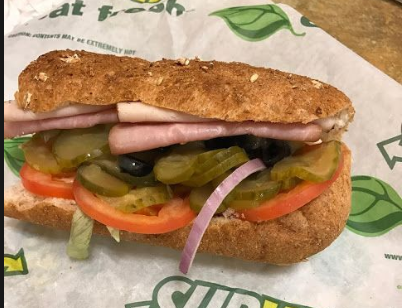
Subway somewhat conforms with Fishbein’s Model of Attitude as consumers decide whether to purchase their products based on their beliefs about an object, evaluation of each attribute and their overall attitude toward products or brand. As subway is a franchise, each store often has different things whether it be sauces, quality of food or employees. in my experience I have noticed across subway stores there are inconsistencies, some employees may be instructed to put less contents on sandwiches, contents may been made, cooked or cut differently and quality differs. Visiting a unfamiliar store can affect a consumers attitude as they may be unaware of quality, as they may have seen inconsistencies in the past like I have. Thankfully Subway have all their salads and contents on display so consumers can have a more accurate evaluation of products before determining purchase intention.

Related image
The perceived product
The actual product

As for the extended Model, it doesn’t really conform besides the fact that other consumers could affect the decision, if a consumer is in a group they may be subjected to norms such as choosing McDonalds as an alternative to Subway, often in groups consumers will stick together unless of course they have strong beliefs and choose Subway over competitors like Mcdonalds more often they may continue to choose Subway even though the rest of the group has decided on McDonalds. This also means they don’t consider social pressures and normative beliefs in their purchasing decision.

References

Solomon, M., Russell-Bennet, R., & Previte, J. (2019). Consumer behaviour (4th ed.)

Chirr.nlm.nih.gov. (2019). Consumer Health Informatics Research Resource – Subjective Norm. [online] Available at: https://chirr.nlm.nih.gov/subjective-norm.php [Accessed 14 May 2019].
Motivation and Values

In the consumer decision making process, Motivation is the driving force and reason behind an information search. It involves the key determinants of a consumers needs and/or wants. Some of these include: Personal characteristics (e.g. genetics), physical characteristics of the environment (e.g. climate, ecology), Individual context (e.g. personal growth, institution or cultural context) and Environmental context (e.g. Economy, public policy, technology).
(Solomon, Russell-Bennet & Previte, 2019)

Motivation also has many variables which can influence the strength of motivation meaning how willing or ready the customer is to make a decision. The motivational strength is the pull exerted on the customer. Direction is also an influential factor which refers to the coping mechanism or activities involved when trying to reduce the motivational tension. (Solomon, Russell-Bennet & Previte, 2019)

There are two main theories behind the motivational strength of consumers:

Drive Theory: refers to the idea that biological needs have an unpleasant effect on a consumer which impacts the level of arousal. The motivation comes from the consumers attempt to reduce the tension caused by the arousal. For example, when we are hungry our stomach may growl or make uncomfortable sounds, possibly experiencing some form of pain (Solomon, Russell-Bennet & Previte, 2019). The consumers way of reducing the tension is too eat something.

Expectancy Theory: refers to idea that achieving desirable outcomes influence behaviour rather than motivation from within. This theory is more about the consumers wants rather than needs. The consumer is exposed to stimuli, unlike in the drive theory when the consumer doesn’t need to be exposed to any stimuli to influence behaviour
(Solomon, Russell-Bennet & Previte, 2019). For example, If we are walking through the shopping center and see a photo of a model wearing attractive clothing we may envision ourselves looking like that, creating a desirable outcome, but not necessarily in reality.

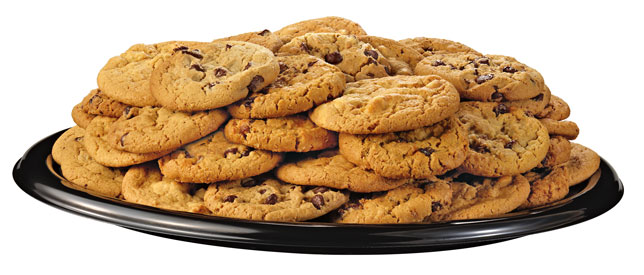
Subway offer a range of food/beverage services, so it would seem obvious that the brand conforms with the drive theory as hunger is a natural biological response and consumers want to reduce the tension in the hopes of returning to a homeostasis state (state of balanced arousal). Even though subways products do help reduce tension as a motivating factor their products can also conform to the expectancy theory as consuming their products can achieve desirable outcomes. Subway offers not only sandwich but also salads, wraps, drinks and cookies. Consuming food makes people happy, taste is an important sense which leaves consumers satisfied. Sight and smell are also big contributing factors, the sight of food or smell of walking past a Subway can often leave ones mouth watering and can trigger internal responses. Subway is perfect for meals and snacking making it an ideal option for consumers whether they are after a sandwich to help satisfy their biological needs or a cookie to allow consumers to achieve a desirable state of satisfaction and happiness.

There has also been some studies which not only test to see if food does make people happy but also what food people consume depending on their current state. research has found that unhappy people tend to be attracted to ‘comfort food’ such as ice cream, chocolate, pasta and other sugary or high carbohydrate food which cheer people up for short periods of time (Makeeverybodyhappy.org, 2019). A study suggests these comfort foods make us happy as it triggers fond memories which makes comfort foods specific to individuals. (HowStuffWorks, 2019)

Here’s an interesting article which goes further in depth to the biological responses:
https://science.howstuffworks.com/life/food-happiness2.htm

References

Solomon, M., Russell-Bennet, R., & Previte, J. (2019). Consumer behaviour (4th ed.)

HowStuffWorks. (2019). Can food make people happy?. [online] Available at: https://science.howstuffworks.com/life/food-happiness2.htm [Accessed 6 May 2019].

Makeeverybodyhappy.org. (2019). Happiness and Food | Make Everybody Happy. [online] Available at: https://makeeverybodyhappy.org/happiness-and-food [Accessed 6 May 2019].

Personality and The Self

To successfully understand why people make decisions, we must look at the factors that influence decisions and the level of involvement in the decision. An individuals personality in a critical factor in understanding consumer behaviour as it can help explain the underlying motivations of individuals. There are three main theories of personality which help explain why people make purchasing decisions: Freudian theory; Neo-Freudian personality theory; and Trait theory.

The Freudian Theory developed by Sigmund Freud is the idea that an individuals personality is derived from the conflict between a persons desire to satisfy their physical needs and function as a responsible member of society
(Solomon, Russell-Bennet & Previte, 2019).

The Neo-Freudian theory refer to other explanations of behaviour that is more influenced by social relationships
(Solomon, Russell-Bennet & Previte, 2019) .

The Trait theory is a quantitative approach where personality is based on psychological traits.
(Solomon, Russell-Bennet & Previte, 2019)

The Freudian Theory also has 3 alternatives for motivation, the first being Id, which is all about immediate satisfaction which operates on self pleasure. The second, Superego, which is based more on ethics and tries to prevent selfish gratification (or Id). Finally, Ego, which tries to balance Id and Superego. So in simpler terms it means the consumer will strive for the most amount of individual gain, that the outside world finds acceptable on an ethical basis.
(Solomon, Russell-Bennet & Previte, 2019)

In the situation of Subway, i would say consumers would tend to follow the Freudian theory with Id as the motive theory, as hunger is a natural human response and and consumers aim for immediate gratification to satisfy only themselves. Subway are very aware of this and if you ever walk past a subway store you can immediately smell the scent of freshly baked breads and goods, this strategy unconsciously triggers a reaction from the consumer by suggesting they must be hungry.

References

Solomon, M., Russell-Bennet, R., & Previte, J. (2019). Consumer behaviour (4th ed.).

Learning & Memory

Learning is a process where individuals consume knowledge and experience to gain a greater understanding of something, in particular consumer learning involves applying that knowledge and experience to future decision making or behaviour (Solomon, Russell-Bennet & Previte, 2019) . There are four main models of learning including: Cognitive learning, classical conditioning, instrumental conditioning and modelling (Solomon, Russell-Bennet & Previte, 2019) , however i am only going to focus on Cognitive learning. This theory is based on processing information, often in response to problem solving, this form of learning often occurs verbally or through reading.

Observational Learning is a form cognitive learning which involves learning through watching the behaviours of others and seeing the reinforcement they receive. Marketers will often try to draw the consumers attention to a desirable model, meaning they will attempt to make their product look attractive and create a gap between the consumers current state (what they have) and desired state (what they want).

In the situation of my brand, Subway, they always make the sandwiches look bright, colourful and tasty using visual effects. As well as actors full of life and friendly with happy, attractive smiles to play employees and show satisfied, happy customers to emphasis the good customer service and comfortable environment subway offers. When consumers see this they create the expectation that they will receive the same customer service and will be pleased with the product.

New products can be a motivator for new and existing customers to visit or revisit Subway

Consumers must then convert this information into action. Buying a product from subway is seen as a low-involvement activity which means customer don’t have to think to much about buying something as its inexpensive and low risk, being a well established brand. However although observational learning is good and effective, the consumer may still need motivation to perform these actions. Motivation can come from incentives such as discounts (e.g. “sub of the day”), meal deals and new products.

Discounts offer lower risk for an already low-involvement decision, meaning customers may be more willing to try something new, attracting new customers or re-exciting existing/former customers.

Here is an advertisement released in 2016 where we see the customer satisfaction and “full of life” employee. https://www.youtube.com/watch?v=3UucimuwjII also notice how the ad directors use subway as an escape from the cold, windy day, it emphasises the comfort of subway and the sense that just by eating subway your day instantly becomes better.

References
Solomon, M., Russell-Bennet, R., & Previte, J. (2019). Consumer behaviour (4th ed.).

Perception

Perception is the process in which individuals choose, arrange and interprets stimuli creating an model or image that is easy for them to understand using all 5 senses
(Solomon, Russell-Bennet & Previte, 2019). A persons perception can be influenced by their values, attitudes and preferences. When it comes to marketing a brand, marketers must be able to understand how to engage their target audience and manipulate them into creating a certain perception of their brand of specific products.

Perceptual selection is a concept which helps describe why customers are more drawn to certain stimuli and how marketers can use these tools to influence customers perception.
(Solomon, Russell-Bennet & Previte, 2019)

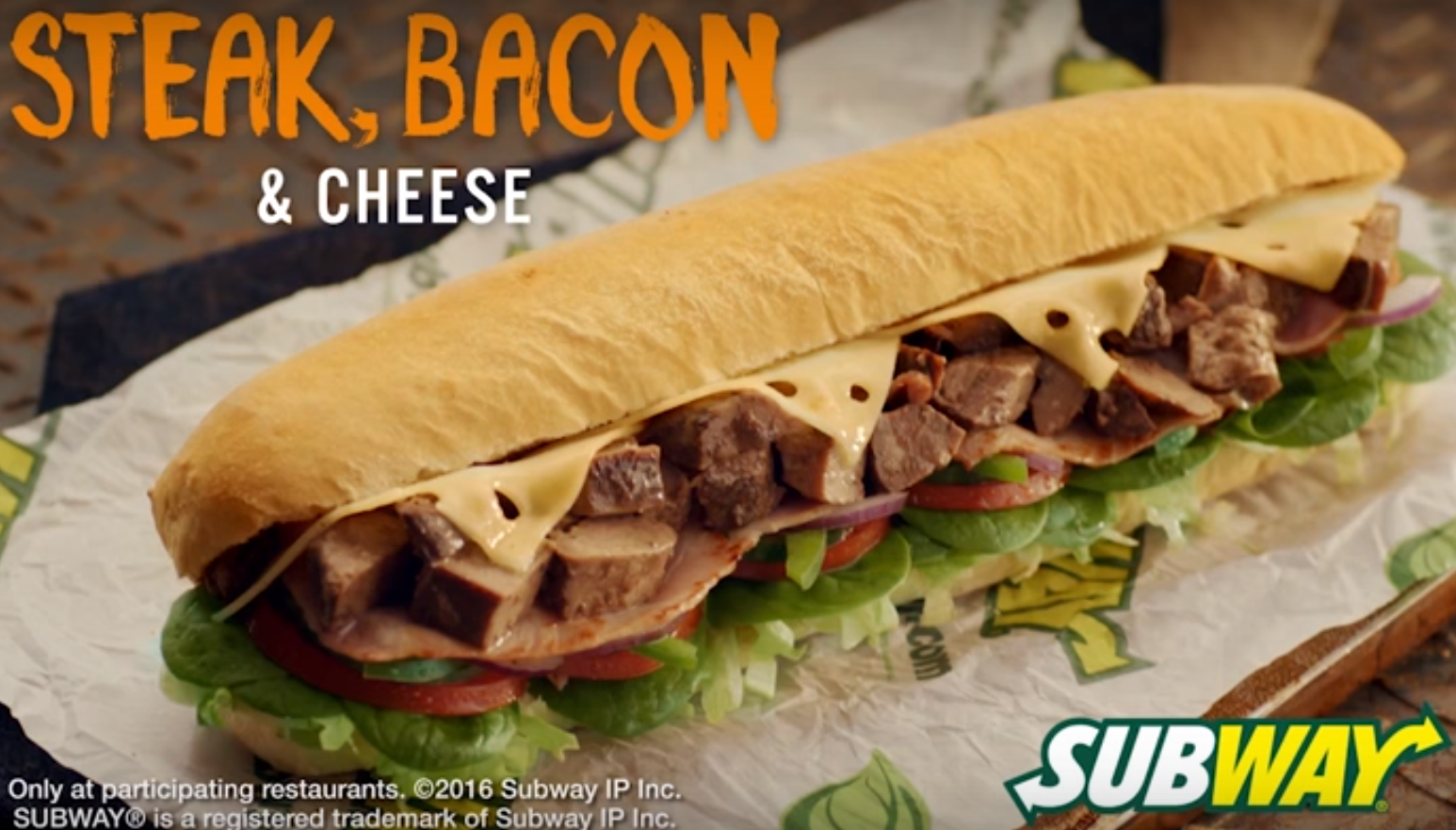
Size: Advertisement can come in many forms, including; Banners, pop-up ads, Email advertising, search engine ads, TV advertisement, etc.(online); newspaper ads, word-of-mouth, Sponsorship’s, etc. (offline). Ads need to be noticeable for the consumers to first of all pay attention. In the case of TV advertisement marketers often make the product they’re selling large and the price or message they’re sending also large with information such as terms and conditions much smaller as it wont have as positive of an impact on the consumer. This is particularly the case in Subway commercials as shown below.

Notice: how there is no expiry date for deal, so they could advertise this up until the night before deal ends and may not be valid at some stores

Colour: Colour can play a big role in gaining the attention of the customer, people often notice things that stand out or are different, and that is exactly the case in marketing, it is important when designing an effective advertisement to use a unique stimuli. As displayed in the image above it is evident subway make their ads very colourful, showcasing their range of salads and meats. with all the colour going on it can become overwhelming for the consumer however, so advertises have incorporated very little information using repetition of the price. They also use a white background to create the colour contrast when displaying their logo so attention is maintained on the centre of the screen making it easier for the customer to remember.

Position: The positioning of information the marketer is trying to convey can also be very important. Research using eye tracking detectors suggest consumers firstly look at the very centre of an image, slowly navigate down the page and to the right. In the subway ad above they focus the important information, being the price and product in the centre.

Novelty: is another way of attracting attention by introducing a unique stimuli which is often unusual or original. In a TV commercial released by Subway in 2018, they used McDonalds Mascots Ronald McDonald in an attempt to steal poach customers. “we could all use a break from a burger” was used in the commercial. By showing iconic Mcdonalds character betraying his own brand and choosing subway, it suggests to them it may be time for a change.

Although the ad wasn’t hugely successful due to Mcdonalds loyal customer base, it did spark attention from consumers and McDonalds who replied to their unsportsman like campaign, which may have resulted in new customers for the company.

References
https://www.youtube.com/watch?v=meWzu85BMBY (Subway ad. ft Ronald Mcdonald)

Solomon, M., Russell-Bennet, R., & Previte, J. (2019). Consumer behaviour (4th ed.).

Product Personalisation

Product personalisation is any product which has been changed in order to meet the needs or wants on consumers (Chang, 2019). The level of importance for this concept varies across different industries and for businesses in the industries which seek personalised products the most, it is important to satisfy their consumers by meeting or exceeding their expectations in order to retain them and improve their brand image.

Personalised products can often cost more for the customers as the business must alter their production process to meet their needs. However, studies have shown people are willing to pay a little more for a customised as they tend to be more satisfied with the product as it gives them a sense of ownership (Chang, 2019). It is important for businesses to keep up to date with the latest technology as it has become an expectation of consumers and greatly improves efficiency particularly with the personalisation of products.

Some business now use this feedback from customers including cookies to use recent searches and history to tailor to the customers’ needs this form of marketing can have a positive or negative affect as it can be seen as an invasion of privacy however it also may help the customer find what they are looking for easier or use these search to find common interests and advertise specific products to them.

References

Algie, J. (2019). Week 2 Lecture Notes.

[ebook]

Available at:

Click to access week%202%20slides%202019.pdf

[Accessed 16 Mar. 2019].

Chang, J. (2019). Understanding The Rise of Personalized Products Ecommerce – Financesonline.com. [online] Financesonline.com. Available at: https://financesonline.com/understanding-rise-personalized-products-ecommerce/ [Accessed 16 Mar. 2019].

Consumer Decision Making Process


Decisions can be complex or simple depending on the context of the situation, we make decision everyday without realising these decisions are based on routine-response behaviour which is often habitual and consumers often don’t go searching for external information as they believe they have enough information to make a informed decision.
(Solomon, Russell-Bennet and Previte, 2019)

Another level of information involved in decision making includes Limited problem solving . Limited problem solving involves consumers having some internal information with basic criteria for evaluating the product but hasn’t completely established preferences. (Solomon, Russell-Bennet and Previte, 2019)

The final level involved in consumer decision making is extensive problem solving where consumers have little to no information about a product and has not identified criteria or any sort of preferences. (Solomon, Russell-Bennet and Previte, 2019)

In relation to an example of my consumer decision making i recently purchased food a at restaurant that i had never been to. So when i was determining what i would like on the menu i narrowed down a few options based on prior knowledge of items on the menu such as what meat i preferred and dishes that i had heard of. So, i created a basic criteria but had not fully established my preferences between the meats, how they where served or what else was on the plate. This means i had a limited problem solving level of decision making, i had to read further into the details about each individual dish to determine what my preferences were.

To determine my preferences i followed the decision making process which consists of three steps:

Need recognition – Involves identifying my actual vs desired state, in this case my desired state was to eat food that i would enjoy and satisfy my wants, my actual state was that i didn’t need food but wanted it. (Solomon, Russell-Bennet and Previte, 2019)

Pre-purchase search – Next I had to look at the menu and narrow down my options but identifying familiar dishes and the ones which had the meats that i liked in them. by doing this i could lower my perceived risks of getting a dish that i didn’t like as they were somewhat familiar to me (the evoked set). (Solomon, Russell-Bennet and Previte, 2019)

Evaluation of alternatives – My next step was to further narrow my options down, so i compared prices, sides and extras, level of hunger (how much food i needed to feel satisfied), and the food i actually felt like eating to determine.
(Solomon, Russell-Bennet and Previte, 2019)